With the new auction reserve price rules now in play, I’ve got two stories about two similar properties, with two very different reserves and agent strategies. Much like my advice about price guides, my advice to buyers around declared reserves is… you guessed it, ignore them.
By that, I mean don’t let the declared reserve determine what you think a property is worth, or whether you should pursue it. A reserve is meant to tell you the vendor’s stated position. It doesn’t replace your own assessment of value, and from what I’ve seen so far, it can also play a part in the marketing strategy.
A low reserve can attract interest and encourage competition. A high reserve can set the starting point for negotiations, particularly when there’s only one serious buyer.
These two properties showed how differently that can playout.
A high reserve and a patient approach
The first property ticked the boxes for my clients: accommodation, style, size, location and, importantly, budget. We’d inspected separately before going through together privately a week before the scheduled auction. We worked through my buyer review report, revisiting the property’s strengths and drawbacks to make sure we weren’t overlooking anything in our excitement. We walked away knowing it was the one.
There was just one problem. The declared reserve was significantly above where we saw value and what we were prepared to pay. My advice was to stay the course. Complete the due diligence, including the building inspection, and be ready for auction day.
The agent was encouraging us to make an offer beforehand, which reinforced my suspicion that we might be the only serious buyers. I also suspected the high reserve could have discouraged buyers who might otherwise have pursued it. Of course, you never know exactly who will turn up on the day. But nothing I was seeing gave me a reason to change our assessment of value.
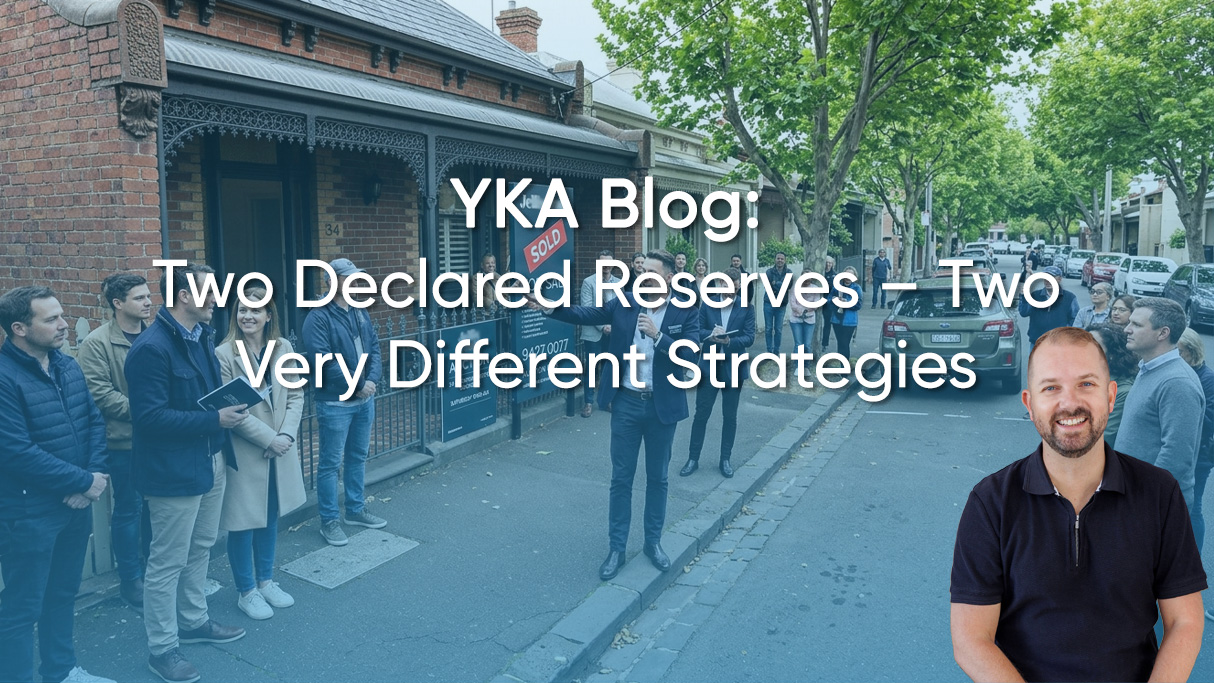
Come auction day, there was a decent crowd, but nobody put up their hand. We made a modest opening bid, had the property passed in to us and headed inside to negotiate. Around half an hour later, we’d secured the home at a fair price, in line with our original valuation and well below the declared reserve.
It was a fantastic result for my clients and their growing family.
Had we treated the reserve as a reason to walk away, we might never have completed the due diligence or arrived ready to buy. Instead, we were in a strong position when the opportunity came.
A low reserve and plenty of competition
The second property was one we’d also considered. It had been renovated beautifully, with an eye for detail and a finish that was always going to attract attention. But looking beyond the renovation, the floor plan had some compromises. For a three-bedroom home, having just one bathroom, with the only toilet inside it, was a drawback for family living. That didn’t mean it wouldn’t suit someone else. We could see it appealing to downsizers, among other buyers, and still expected it to perform well.
The declared reserve was well below where we assessed its market value. To my eye, this was the opposite approach: set an attractive starting point and let competition do the work. Sure enough, multiple buyers competed at auction, driving the result above the price we’d paid for the other property the week before.
Two similar properties. Two very different approaches. One used a high reserve as a starting point for negotiations. The other used a low reserve to help draw buyers into competition.
Do your own numbers
As a result of educating my clients, neither declared reserve changed what those properties were worth to us. The high reserve didn’t mean we had to pay more. The low reserve didn’t mean the other property was going to be a bargain.
That’s why my advice remains much the same as it has always been with price guides: do your own numbers. Look at comparable sales, understand the property’s strengths and compromises, complete your due diligence and decide what you’re prepared to pay. If a reserve looks too high, don’t automatically rule the property out. If it looks low, don’t assume you’ve found a bargain.
The reserve is the vendor’s strategy. Make sure you know yours.
We take the stress and anxiety out of the property purchasing experience.
Contact Us